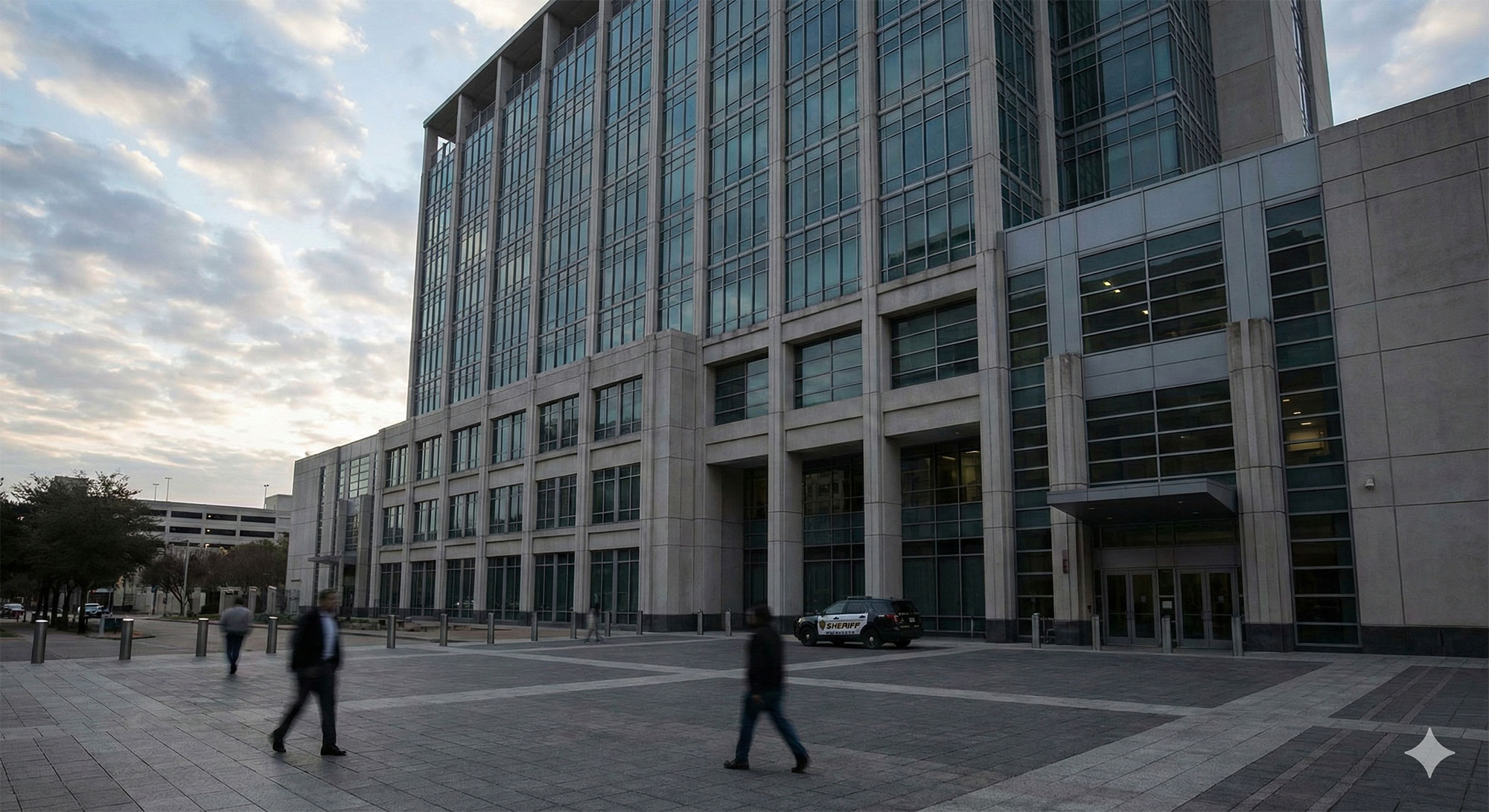
For decades, the Texas Constitution stood as a firm guardian of the “Right to Bail.” Except in very narrow capital murder cases, every person accused of a crime in Texas had a fundamental right to be released pending trial, provided they could meet the financial conditions of a bond. However, as we move through 2026, that landscape has fundamentally shifted. The passage and implementation of Proposition 3 (SJR 5) has ushered in a new era of judicial discretion that threatens the presumption of innocence for thousands of Texans.
At DeGuerin & Dickson, we believe that understanding these changes is the first step in defending your liberty. If you or a loved one is facing a serious accusation in Houston or anywhere across the state, the rules of the game have changed, and the stakes of your initial bail hearing have never been higher.
What is Proposition 3 (SJR 5)?
Proposition 3 is a Texas Constitutional Amendment that significantly expands the circumstances under which a judge can deny bail altogether. Prior to this shift, the “Right to Bail” was nearly absolute. Under the new reality of SJR 5, a judge now has the authority to order “pretrial preventive detention”—meaning you stay in jail until your trial—if you are accused of certain violent or sexual offenses.
This amendment was designed to give the judiciary more “teeth” in keeping individuals they deem dangerous off the streets. However, in practice, it gives the prosecution a powerful tool to keep accused individuals incarcerated without a conviction, often for months or even years as the backlogged Texas court system moves toward a trial date.
The Shift from "Right to Bail" to Judicial Discretion
The most significant impact of Proposition 3 is the move away from a rules-based system toward a discretion-based system. Previously, if a defendant could afford the bail set by the schedule, they were released. Now, a judge must conduct a deeper inquiry into the “threat” the defendant poses to the community or the victim.
This shift places an immense amount of power in the hands of a single individual: the presiding judge. In a politically charged environment like Harris County, judges are under constant pressure to be “tough on crime.” Under the new 2026 standards, there is a growing trend of judges opting for detention rather than release to avoid the political risk of a defendant committing a new crime while out on bond.
What Counts as "Clear and Convincing Evidence"?
Under SJR 5, the prosecution cannot simply ask for a bail denial; they must prove that detention is necessary by “clear and convincing evidence.” While this is a higher burden of proof than the “preponderance of the evidence” standard used in most civil cases, it is lower than the “beyond a reasonable doubt” standard required for a criminal conviction.
To deny your right to release, the state must demonstrate that:
- The defendant is charged with a specific violent or sexual offense defined by the legislature.
- No set of bond conditions (such as GPS monitoring or house arrest) can reasonably ensure the safety of the community or the victim.
- The evidence of the current crime is substantial enough to warrant the loss of liberty before a trial occurs.
Because “clear and convincing” is a subjective legal standard, the quality of your legal representation during the initial 48 hours after an arrest is now the most critical factor in your case.
Why the Initial Bail Hearing is Now Your "First Trial"
In the past, many defense attorneys treated bail hearings as a formality. Under the new Texas bail laws of 2026, we treat the bail hearing as your “first trial.” If the prosecution successfully moves for a denial of bail under Proposition 3, you lose your ability to assist in your own defense from the outside, you risk losing your employment, and the pressure to accept a plea deal—even if you are innocent—increases exponentially.
An elite defense requires a proactive approach. We do not wait for the prosecution to build a narrative of “danger.” We immediately gather evidence, character witnesses, and expert testimony to prove that our clients are not a threat to the community. By dismantling the prosecution’s “clear and convincing” argument at the outset, we preserve our clients’ freedom and their ability to fight the charges from a position of strength.
Protecting Your Future in a Changing Legal Climate
The “New Reality” of bail in Texas means that the presumption of innocence is under fire. When the state has the power to take your liberty before you have ever stepped foot in front of a jury, you need a legal team that understands the nuances of SJR 5 and has the reputation to command respect in the courtroom.
At DeGuerin & Dickson, we have spent decades defending the rights of the accused in the most complex, high-stakes cases in the country. If you are concerned about how these new bail laws affect your situation, contact us today for a confidential consultation. Your right to release is no longer guaranteed—it must be fought for.